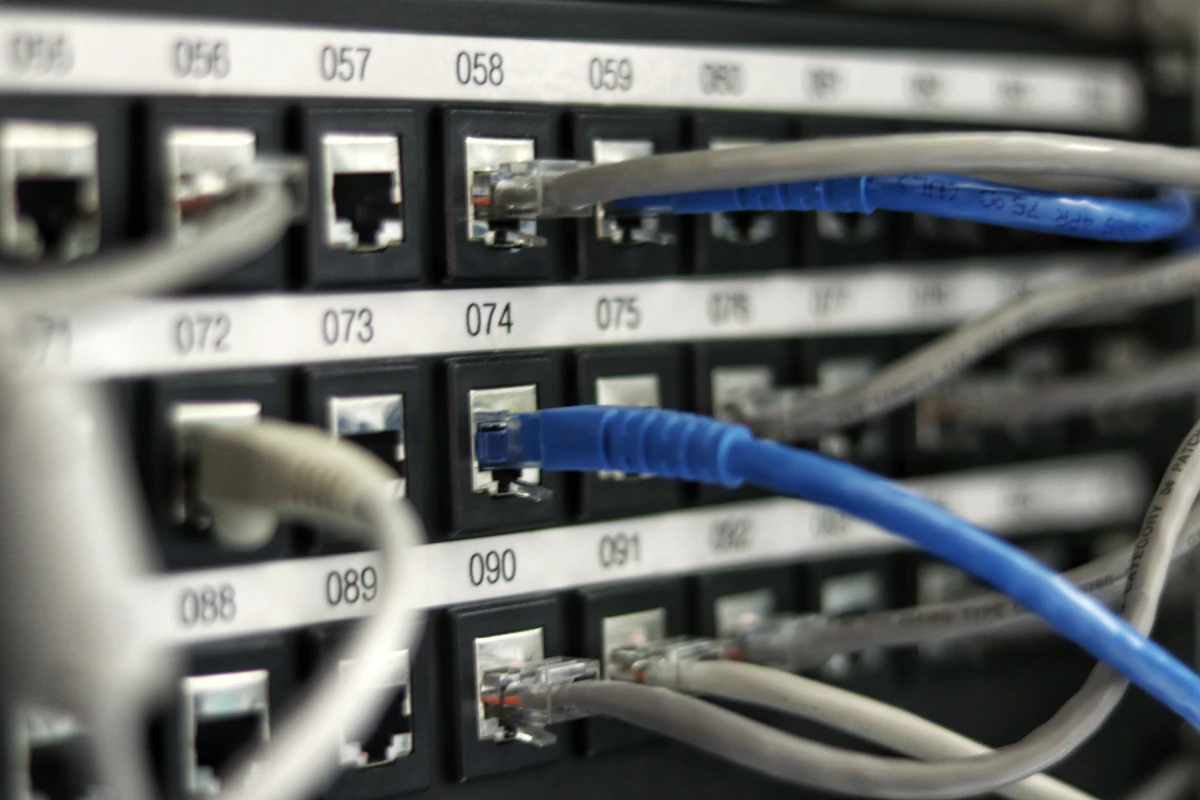
*Photo by [iBecome Communication](https://unsplash.com/@ibecomecommunication) on [Unsplash](https://unsplash.com)*
We live in an era of unprecedented data generation. By 2026, the global datasphere is projected to reach over 175 zettabytes. Between the widespread adoption of spatial computing, the omnipresence of generative AI pipelines, the expansion of IoT edge networks, and the rollout of ultra-high-definition media, our systems are constantly being pushed to their limits.
While network bandwidth and storage capacities have grown, they have not kept pace with our insatiable appetite for data. This imbalance has highlighted a critical reality for developers, system architects, and enterprise leaders: the **importance of using compression tools in 2026** has shifted from a mere best-practice optimization to a fundamental survival strategy for modern digital infrastructure.
In this comprehensive guide, we will explore why data compression has become a cornerstone of technological efficiency in 2026. We will dive deep into its economic, operational, and environmental impacts, examine the cutting-edge algorithms shaping the industry, and provide actionable strategies to integrate compression into your modern tech stack.
---
## 1. The Data Explosion of 2026: Why More Bandwidth Didn't Solve Our Problems
For decades, optimists believed that the continuous rollout of faster network technologies—such as 5G, early-stage 6G, and low-Earth-orbit (LEO) satellite constellations—would make data compression obsolete. The logic seemed simple: *if we can transmit gigabits of data per second, why spend CPU cycles compressing it?*
In 2026, we have discovered the hard truth: **Jevons' Paradox**. As technological advancement increases the efficiency with which a resource is used, the rate of consumption of that resource rises. Faster, cheaper pipelines have simply encouraged the creation of exponentially larger datasets.
### The Fallacy of Unlimited Bandwidth
While 5G and fiber networks offer incredible peak speeds, they suffer from practical limitations:
* **Spectrum Congestion:** Dense urban areas experience significant latency spikes and packet loss as billions of smart devices vie for the same localized spectrum.
* **Unreliable Edge Connectivity:** Remote IoT deployments, maritime logistics, and aviation networks rely on satellite links that are highly sensitive to weather conditions.
* **The Latency Floor:** Even with speed-of-light transmissions, physical distance introduces latency. Large, uncompressed payloads require more round-trip times (RTT) for transmission verification.
### The Rise of Rich, High-Definition Spatial Media
The hardware landscape of 2026 is dominated by spatial computing headsets, augmented reality (AR) glasses, and ultra-high-definition displays.
A single minute of high-fidelity volumetric video or a detailed 3D Gaussian Splatting scene can easily exceed several gigabytes. Without state-of-the-art lossy and lossless compression pipelines running on the fly, streaming these immersive experiences to consumers would crash the most robust content delivery networks (CDNs) on Earth.
---
## 2. The Financial Imperative: Cloud Storage Costs and Resource Optimization
From a business perspective, the **importance of using compression tools in 2026** is directly tied to the bottom line. Cloud service providers (CSPs) like AWS, Google Cloud, and Microsoft Azure have structured their pricing models around three main vectors: **storage volume, compute operations, and network egress.**
Without deliberate compression strategies, enterprises run the risk of experiencing "cloud bill shock."
### The Cost of Cold, Warm, and Hot Storage
| Storage Tier | Without Compression (1 PB/month) | With Compression (3:1 Ratio) | Monthly Savings |
| :--- | :--- | :--- | :--- |
| **Hot Storage** (S3 Standard) | ~$23,000 | ~$7,659 | **$15,341** |
| **Warm Storage** (Infrequent Access) | ~$12,500 | ~$4,166 | **$8,334** |
| **Cold Storage** (Glacier Deep Archive) | ~$990 | ~$330 | **$660** |
By implementing high-performance compression tools directly into data ingestion pipelines, an enterprise can slash storage costs by **60% to 80%**, saving hundreds of thousands of dollars annually.
### Egress Fee Mitigation
Network egress fees—the charges incurred when moving data out of a cloud provider's network—remain a major operational expense. High-performance compression tools act as a force multiplier for budget optimization.
---
## 3. Artificial Intelligence and Machine Learning: Feeding the Data Beast
The explosive growth of generative AI and Large Language Models (LLMs) has reshaped software engineering. In 2026, AI is baked into the core architecture of almost every software application. This transition has placed a heavy burden on data engineering pipelines, making compression tools indispensable for AI/ML workflows.
### Quantization as a Form of Compression
To run large models on edge devices or consumer-grade hardware, developers must utilize **model compression techniques**. This includes:
* **Weight Quantization:** Converting model weights from 32-bit floating-point (FP32) formats to lower-precision formats like INT8, INT4, or even 1.58-bit representations. This drastically reduces the VRAM footprint of the model.
* **Pruning and Knowledge Distillation:** Removing redundant or low-impact parameters from neural networks, resulting in faster inference speeds and smaller distribution packages.
### Training Data Pipeline Bottlenecks
During the training phase of massive deep learning models, GPUs must be continuously fed with training data. If the storage system cannot deliver data fast enough, these expensive chips sit idle—a phenomenon known as the **I/O bottleneck**.
By storing training datasets in highly compressed, structured formats (like Apache Parquet with Zstandard compression) and decompressing them directly in memory, developers can keep GPUs operating at 100% capacity.
---
## 4. The Green Imperative: Sustainability and Carbon Footprint Reduction
Environmental sustainability is a core operational requirement for modern enterprises. As nations enforce stricter carbon reporting standards, IT departments are being held accountable for the energy consumption of their digital estates.
By emphasizing the **importance of using compression tools in 2026**, organizations can directly decrease their carbon footprint in several ways:
1. **Reducing Physical Hardware Demand:** Compressing data means fewer physical solid-state drives (SSDs) and hard drives need to be manufactured, shipped, powered, and eventually recycled.
2. **Decreasing Transmission Energy:** Transmitting compressed data requires fewer packets to be processed by network switches, routers, and cell towers.
3. **Optimizing Thermal Efficiency:** Lower compute overhead for disk reads and writes translates to less heat generated within data center racks, reducing the energy needed for cooling systems.
---
## 5. Modern Compression Algorithms and Tools of 2026
The compression landscape in 2026 has evolved far beyond basic ZIP and GZIP formats.
### A. General-Purpose Algorithms
* **Zstandard (zstd):** Developed by Meta, Zstandard has become the undisputed standard for general-purpose, lossless compression. It offers an incredible balance between compression ratio and speed.
* **Brotli:** Maintained by Google, Brotli is optimized specifically for web assets (HTML, CSS, JavaScript), yielding compression ratios that outclass GZIP by up to 20-30%.
### B. Media and Visual Compression
* **AVIF (AV1 Image File Format):** AVIF has achieved mainstream dominance in 2026, offering superior detail retention at a fraction of the file size of legacy JPEG and WebP formats.
* **JPEG XL:** Known for its high fidelity, JPEG XL supports ultra-fast lossless recompression of legacy JPEG images, reducing sizes by up to 35%.
* **AV1 and H.266 (VVC):** These video codecs power the 2026 streaming ecosystem, enabling high-frame-rate 4K and 8K streaming.
### C. Big Data and Structured Storage
* **Apache Parquet with Snappy/Zstd:** Columnar storage formats like Parquet, when combined with fast compression codecs, allow data warehouses to store trillions of rows of tabular data efficiently.
### Algorithmic Comparison Matrix (2026 Ecosystem)
| Algorithm | Type | Primary Use Case | Key Strength | Typical Compression Ratio |
| :--- | :--- | :--- | :--- | :--- |
| **Zstandard (zstd)** | Lossless | Logs, APIs, System Backups | Balanced speed/ratio, highly tunable | High (3:1 to 5:1) |
| **Brotli** | Lossless | Web Assets (JS, CSS, HTML) | Optimized for web-text structures | Very High (for text) |
| **AVIF** | Lossy/Lossless | Web Imagery, Textures | Exceptional visual quality at low sizes | Extremely High (10:1+) |
| **JPEG XL** | Lossy/Lossless | Photography, Graphics | Lossless legacy JPEG conversion | High |
| **Snappy** | Lossless | Database Ingestion, Streaming | Ultra-fast speeds, very low CPU overhead | Moderate (1.5:1 to 2:1) |
---
## 6. Practical Applications: Where You Must Implement Compression Today
### Web Infrastructure and Edge Gateways
Modern web applications must be optimized for performance. Ensure your reverse proxies (Nginx, Caddy, Cloudflare, or AWS CloudFront) are configured to prefer Brotli compression over GZIP for static resources.
```nginx
# Enable Brotli compression
brotli on;
brotli_comp_level 6;
brotli_min_length 20;
# Specify content types to compress
brotli_types
text/plain
text/css
application/javascript
application/json
image/svg+xml;
```
### DevOps and CI/CD Pipelines
Containerization is a foundational practice for modern deployments, but large container images slow down deployments and increase container registry storage costs.
```dockerfile
# Multi-stage build example
FROM golang:1.26-alpine AS builder
WORKDIR /app
COPY . .
RUN CGO_ENABLED=0 GOOS=linux go build -ldflags="-s -w" -o myapp
FROM gcr.io/distroless/static-debian12
COPY --from=builder /app/myapp /myapp
ENTRYPOINT ["/myapp"]
```
---
## 7. Future-Proofing Your Tech Stack: A Step-by-Step Implementation Strategy
### Step 1: Conduct a Comprehensive Data Audit
* Identify your largest storage volumes and network data transfers.
* Determine which data pipelines are currently running completely uncompressed.
### Step 2: Establish the Right Tooling
* **For Web Assets:** Migrate standard asset pipelines to Brotli.
* **For Images:** Configure automated conversion pipelines to transition legacy `.png` and `.jpg` file uploads to `.avif` or `.jxl`.
* **For Big Data & Databases:** Configure databases (like PostgreSQL, ClickHouse, or MongoDB) to utilize modern, compression-friendly storage engines.
### Step 3: Implement Automated Quality Assurance Metrics
Ensure that lossy compression levels on media assets are monitored to prevent artifacting. Establish performance budgets for your frontend applications.
### Step 4: Monitor CPU and Latency Tradeoffs
Compression is a balance between CPU utilization and storage/network savings. Use monitoring dashboards (such as Prometheus and Grafana) to measure the impact of compression on CPU workloads.
---
## Conclusion: Emphasizing Efficiency in a Resource-Constrained World
The **importance of using compression tools in 2026** is clear. In a digital landscape characterized by exponential data growth, rising cloud costs, compute-heavy AI operations, and a global focus on sustainability, we can no longer afford to treat data management as an afterthought.
Data compression tools do more than just shrink files; they optimize system performance, lower operational costs, and reduce our environmental footprint. By understanding modern algorithms and systematically integrating them into our tech stacks, we can build efficient, scalable, and resilient systems capable of meeting the demands of the future.
Start optimizing today with ToolFusion's free tools — [Image Compressor](/image/image-compress), [Video Compressor](/video/video-compress), and [GIF Optimizer](/gif/gif-optimize) — all completely free, no signup required!